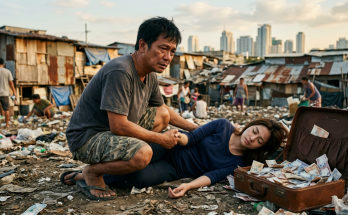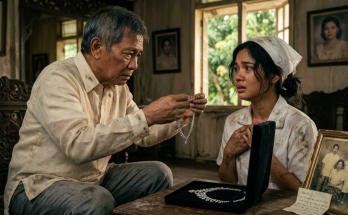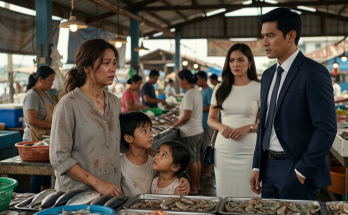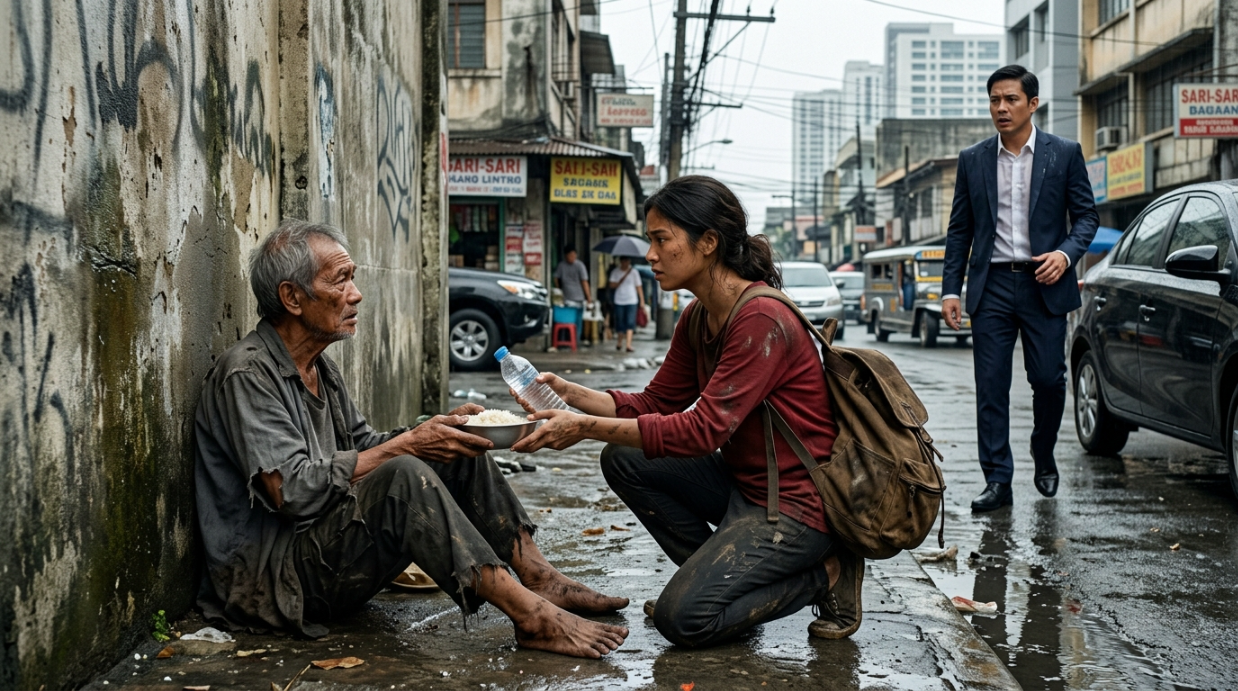
“HULING ₱40 NIYA, IPINAMBILI NG LUGAW PARA SA GUTOM NA MATANDA—KINABUKASAN, NANIGAS ANG BATANG NANGANGALAKAL NANG MALAMANG CHAIRMAN PALA ITO!”
“Tay… kayo na lang po kumain.”
Napatingin ang matandang lalaki sa mangkok ng mainit na lugaw.
Then sa batang babae sa harap niya.
Mga fourteen years old.
Payat.
Sunog sa araw ang balat.
Naka-kupas na T-shirt.
May lumang tsinelas.
At sa likod niya—
isang kariton na puno ng lata, bakal, lumang wire at basag na appliances.
“Hindi.”
Sabi ng matanda.
“Ikaw ang bumili.”
Umiling ang bata.
“Kumain na po ako.”
Mula sa kabilang mesa, sumigaw ang tindera:
“Lia! Huwag kang magsinungaling! Kanina ka pa walang kain!”
Napangiwi ang bata.
“Ate Nena naman…”
Napatingin ang matanda.
“Wala ka pang kain?”
“Okay lang po.”
“Then hati tayo.”
“Hindi po.”
“Bakit?”
Doon ngumiti si Lia.
“Mas matanda kayo.”
“Mas matanda lang.”
“Hindi mas gutom.”
Pero halata.
Nanginginig ang kamay ng matanda.
At halos isang oras na itong nakaupo sa gilid ng palengke nang walang kinakain.
Kaya itinulak ng bata ang mangkok palapit.
“Please po.”
Ang pangalan niya ay Lia Ramos.
Fourteen years old.
Grade 8.
Tuwing madaling-araw—
bago pumasok sa eskuwela—
tumutulong siyang mangolekta ng scrap metal kasama ang tiyuhin niyang si Mang Ben.
Hindi dahil gusto niyang tumigil sa pag-aaral.
Kabaligtaran.
Ginagawa niya iyon para hindi kailangang tumigil.
Ang nanay niya, si Mila, ay laundry worker.
Ang ama niya ay matagal nang wala sa kanilang buhay.
Hindi patay.
Hindi rin dramatic mystery.
Umalis lang.
At hindi na bumalik.
Kaya bawat piso—
may trabaho.
Baon.
Pamasahe.
Bigas.
Kuryente.
School project.
Ang ₱40 na ginastos ni Lia sa lugaw—
iyon na ang huli niyang pera sa araw na iyon.
Dapat pamasahe pauwi.
Pero nang makita niya ang matandang lalaki—
nakaupo sa tabi ng basurahan, pawis, maputla, tila nalilito—
hindi niya kayang lumagpas.
“Tay, okay lang po kayo?”
“Hindi ko alam.”
“Ano pangalan n’yo?”
Matagal bago sumagot.
“Eduardo.”
“Nasaan bahay n’yo?”
Tahimik.
“May cellphone?”
Umiling.
“Wallet?”
Tinapik ang bulsa.
Wala.
“May kasama?”
“Hindi ko maalala.”
Doon kinabahan si Lia.
Hindi niya agad inisip na pulubi ang matanda.
Mas malinis ang damit nito kaysa karaniwang namamalimos.
Pero gusot.
May mamahaling leather shoes—
may putik.
At may sugat sa isang tuhod.
“Baka naligaw kayo.”
Sabi ni Lia.
“Baka.”
“May sakit kayo?”
“High blood.”
“Medicine?”
“May gamot dapat…”
Humawak sa ulo ang matanda.
“Hindi ko alam nasaan bag ko.”
Tinawag ni Lia si Ate Nena.
“Baka kailangan barangay.”
“Oo.”
Pero bago sila makatawag—
biglang nanghina ang matanda.
Nahawakan ni Lia ang braso.
“Tay!”
“Hinga lang.”
“Tubig!”
Pinaupo nang maayos.
Hindi nila pinainom nang sapilitan.
Tinawagan ang barangay response team.
Within minutes—
dumating ang responders.
Blood pressure high.
Possible dehydration.
Possible transient confusion.
They brought him to a nearby clinic.
“Lia.”
Sabi ni Ate Nena.
“Uuwi ka paano?”
Napatingin siya sa bulsa.
Empty.
“Lakad.”
“Malayo.”
“Mga apat na kilometro lang.”
“Apat ‘lang’?”
Ngumiti si Lia.
“Exercise.”
Pinagalitan siya ni Nena.
At binigyan ₱20.
“Hiram.”
“Bayaran mo bukas.”
“Opo.”
Hindi charity.
Utang.
Mas gusto iyon ni Lia.
Kinabukasan—
pumasok siya sa school.
Normal.
Science quiz.
Filipino recitation.
Mura na lunch.
Pagkatapos ng klase—
dumiretso ulit sa junkshop.
Hindi niya alam kung anong nangyari sa matanda.
“Baka okay na.”
Sabi niya sa tiyuhin.
“Baka nakauwi na.”
Mang Ben nodded.
“Good.”
Tapos na sana ang kuwento.
Pero alas-kuwatro ng hapon—
may tatlong itim na sasakyan na huminto sa tapat ng junkshop.
Napatingin lahat.
“May raid?”
biro ng isang lalaki.
“Tumahimik ka.”
Bumaba ang dalawang lalaking naka-formal suit.
Then isang babaeng nasa fifties.
At sa likod—
ang matandang lalaki.
Mas maayos ang damit.
May tungkod.
At ngayong malinis na ang mukha—
parang may nakitang pamilyar si Mang Ben.
“Wait…”
“Lia.”
Tawag ng matanda.
Nanlaki mata niya.
“Tay Eduardo?”
Ngumiti.
“Found you.”
Lumapit si Lia.
“Okay na po kayo?”
“Yes.”
“Naalala n’yo bahay n’yo?”
Tumawa ang matanda.
“Unfortunately, oo.”
The woman beside him looked amused.
“Papa.”
Doon napatingin si Lia.
“Papa?”
The woman offered her hand.
“I’m Carmina Valdez.”
“Daughter niya.”
Then:
“My father is Eduardo Valdez.”
Wala pa ring reaction si Lia.
Mang Ben whispered:
“Lia…”
“Ano?”
“Valdez Consolidated.”
Still blank.
“Yung malaking company.”
“Anong malaking company?”
The woman smiled.
“Marami.”
Eduardo Valdez was seventy-three.
Chairman emeritus of Valdez Consolidated Corporation.
A family-controlled business group with interests in food processing, packaging, logistics, and construction materials.
Not the richest man in the country.
But undeniably wealthy.
That morning—
he had gone to inspect an old company warehouse without announcing himself to senior management.
Not disguised.
Not testing workers.
Just old-fashioned.
He liked seeing facilities personally.
On the way back—
he insisted on getting out of the car near the public market because he wanted to buy a specific kind of dried mango.
His driver parked farther away due traffic.
Then Eduardo had an episode of disorientation.
Later doctors suspected a combination of dehydration, skipped medication, heat exposure, and possibly a transient medical event requiring further evaluation.
He wandered.
His phone and wallet were in the car.
The driver searched.
Security searched.
Family panicked.
Then barangay responders brought him to clinic.
That was where they found him.
Carmina looked at Lia.
“Papa told us about you.”
“Ako po?”
“Yes.”
“You bought him lugaw.”
Lia shrugged.
“Gutom po siya.”
Eduardo smiled.
“Using your last money.”
Doon siya tumingin nang masama sa matanda.
“Sinabi ni Ate Nena?”
“Yes.”
“Chismosa.”
Everyone laughed.
Then Eduardo asked:
“Why did you do it?”
Lia thought.
“Gutom kayo.”
“That’s all?”
“Opo.”
“Hindi mo naisip baka niloloko ka?”
“Konti.”
“Then?”
“Kung niloko n’yo ko, lugaw lang naman.”
“Paano pamasahe mo?”
“Nilakad ko sana.”
Eduardo’s smile disappeared.
“That’s not small.”
“Sa akin po hindi rin sobrang laki.”
“Forty pesos was all you had.”
“Opo.”
“Then it was everything.”
Lia became uncomfortable.
“Hindi naman po kailangan gawing malaking bagay.”
That sentence stayed with him.
Carmina opened a bag.
Lia immediately stepped back.
“Ano po yan?”
“Nothing dramatic.”
She took out an envelope.
“Reimbursement.”
Lia frowned.
“Anong reimbursement?”
“Lugaw.”
Inside—
₱40.
Exactly.
Lia stared.
Then laughed.
“Talaga?”
Eduardo nodded.
“May utang ako.”
She took it.
“Okay.”
“Interest?”
“Wala.”
“Good.”
Then came the part everyone expected.
Maybe cheque.
Maybe scholarship.
Maybe house.
Eduardo did none of that.
He asked instead:
“Do you study?”
“Yes.”
“Grade?”
“Eight.”
“Good grades?”
Lia hesitated.
“Okay.”
“Top student?”
“No.”
“Favorite subject?”
“Science.”
“Why?”
“May sagot usually.”
Eduardo laughed.
“Life, less so.”
He noticed something beside the junkshop.
A dismantled electric fan.
Wires neatly separated.
Copper wound apart.
Small screws in a bottle.
“You did that?”
Lia nodded.
“Why organized?”
“Mas mahal pag hiwalay.”
“Who taught you?”
“Tito Ben.”
Mang Ben raised hand awkwardly.
Eduardo crouched slightly.
“Do you know what this is?”
Pointed to a small motor capacitor.
“Yes.”
“Use?”
“Helps motor start.”
“Exact?”
“Hindi ko alam scientific.”
“Fair.”
Carmina watched.
Something had shifted.
Instead of offering money—
Eduardo asked Mang Ben:
“Can I visit your sorting process?”
The junkshop owner laughed nervously.
“Sir, marumi.”
“So?”
“Chairman kayo.”
“Retired-ish.”
Carmina muttered:
“Not enough.”
They walked through.
Eduardo discovered the junkshop had a problem.
Good volume.
Bad safety.
Children occasionally helped strip wires.
Sharp metal.
No proper gloves.
Some people burned insulation from copper wire—dangerous smoke.
Lia did not burn wire because school teacher had warned her.
But others did.
“Why no machine stripper?”
Mang Ben laughed.
“Expensive.”
“How expensive?”
He named rough cost.
Eduardo said nothing.
Good.
He didn’t immediately buy one.
Two days later—
a team from one of Valdez Consolidated’s recycling partners visited.
Not to take over.
They offered a pilot purchasing arrangement:
better sorting specifications,
transparent weight scales,
protective gloves,
training on hazardous materials,
and access to a shared mechanical wire stripper at a nearby consolidation point.
Mang Ben asked:
“Dahil kay Lia?”
The manager answered:
“Chairman asked us to review whether small scrap suppliers could enter the formal recycling chain.”
“Not just us?”
“Whole district pilot.”
Better.
No favoritism disguised as gratitude.
Lia continued school.
Still collected scrap on some mornings.
But less.
Why?
Because the formal arrangement improved the price for properly sorted materials.
Mang Ben needed fewer hours to earn similar income.
And more importantly—
he stopped allowing Lia near dangerous dismantling work.
“School.”
He said.
“But Tio—”
“School.”
“Bakit ngayon?”
“Chairman scared me.”
Eduardo, when told, said:
“I did not.”
Mang Ben replied:
“Suit pa lang.”
Several weeks later, Eduardo invited Lia and her mother to visit one of the company’s materials-recovery facilities.
Not private office.
Facility tour.
Safety briefing.
Recycling line.
Metal sorting.
Compaction.
Packaging recovery.
Lia was fascinated.
“Ma…”
“Ano?”
“Ang laki nung magnet.”
A plant engineer explained eddy-current separation.
Lia asked twelve questions.
Maybe more.
Eduardo mostly watched.
At lunch—
Mila, Lia’s mother, pulled Carmina aside.
“Ma’am.”
“Yes?”
“Salamat.”
“For?”
“Pero sana…”
She hesitated.
“Wag n’yo po gawing project anak ko.”
Carmina became quiet.
“What do you mean?”
“Mabait siya.”
“Pero bata.”
“Ayoko lumaki siya na pakiramdam kailangan niyang maging sobrang bait para may tumulong.”
That was wise.
Carmina nodded.
“You’re right.”
So when the company later opened applications for a new technical youth exposure program in partnership with public schools—
Lia was not automatically selected.
She applied.
Wrote exam.
Practical assessment.
Interview.
She ranked well.
Not first.
But high enough.
She joined.
Saturday workshops.
Basic electronics.
Mechanical systems.
Waste segregation.
Safety.
No promise of scholarship.
No guarantee job.
Just access.
One afternoon, another participant whispered:
“Obviously nakapasok ka dahil kilala mo chairman.”
That hurt.
Lia almost quit.
She told Eduardo.
He did not say:
“Forget them.”
Instead:
“Did you meet the criteria?”
“Yes.”
“Was there independent scoring?”
“Yes.”
“Then?”
“Still nakakahiya.”
He nodded.
“Benefit from knowing powerful people can create doubt even when you earned something.”
“What do I do?”
“Ask for transparency.”
So she did.
Program staff showed selection criteria to all participants, not just her.
Scores anonymized where appropriate.
Clear process.
Rumor diminished.
Not vanished.
But fairer.
Months passed.
Eduardo and Lia did not become magical grandfather-granddaughter overnight.
They saw each other occasionally.
He bought lugaw sometimes.
Always paid.
One morning he joked:
“Libre?”
Lia looked at him.
“Chairman kayo.”
“Exactly.”
“Bayad.”
He laughed.
One day Eduardo asked:
“What do you want to be?”
Lia thought.
“Engineer.”
“What kind?”
“Hindi ko pa alam.”
“Good.”
“Bakit good?”
“Fourteen ka.”
“Hindi kailangan final answer.”
That relieved her.
Adults always asked as if a child should already know.
Then came a harder truth.
Lia’s school attendance was slipping.
Not because lazy.
Because sometimes she still woke at 4:30 AM to collect scrap.
A teacher raised concern.
Eduardo learned through the program.
He wanted to pay everything.
Carmina stopped him.
“Papa.”
“What?”
“You’re doing it again.”
“Ano?”
“Turning problem into cheque.”
He became annoyed.
“What’s wrong with paying?”
“Nothing if that’s the right solution.”
“Then?”
“Ask the family.”
They did.
Mila said the real issue was rent and inconsistent laundry work.
Not tuition.
Public school.
The household needed stable monthly income.
Lia’s scrap earnings filled gaps.
If someone simply paid her school expenses—
she would still collect scrap for rent.
So the better question:
what could improve Mila’s income?
She was already skilled at laundry and ironing.
A nearby uniform supplier needed reliable finishing staff.
Through an open hiring referral—not a made-up job—Mila applied.
Passed trial work.
Got a more stable position.
Higher, predictable pay.
Lia’s scrap work decreased to occasional weekends.
That changed more than a scholarship cheque would have.
“See?”
Carmina told her father.
“Not every problem belongs to the child.”
Eduardo nodded.
“I know.”
“You learned.”
“Old people can learn.”
“Slowly.”
Two years passed.
Lia, now sixteen, was still not rich.
Good.
She had better shoes.
A secondhand laptop from the school equipment lending program.
More time to study.
Still helped Mang Ben sometimes.
She had learned basic CAD.
Motor control.
Safety.
She repaired a school laboratory exhaust fan with supervision.
That made her happier than meeting a chairman.
Eduardo’s health also changed.
The episode at the market turned out not to be dementia.
Good.
But he had cardiovascular risks and medication-management issues.
His family insisted on more regular monitoring.
He hated it.
“Parang prisoner.”
Carmina said:
“Chairman prisoner.”
He rolled eyes.
He also stopped wandering alone in extreme heat.
Progress.
At seventy-five, Eduardo formally retired as chairman.
During his final company town hall, someone asked:
“Sir, what moment changed your perspective most?”
He could have mentioned decades of business.
Instead:
“Being hungry with no wallet.”
People laughed.
He continued:
“I had no access to money for a few hours.”
“That did not make me poor.”
Silence.
“I knew somewhere I had a home, family, accounts, employees.”
“Real poverty is not a costume I briefly wore.”
The room became quieter.
“But a fourteen-year-old girl with forty pesos gave me food.”
“Not because she thought I was important.”
“Because she thought I was hungry.”
Then:
“If our company only treats people well after discovering they matter to us, then we have learned nothing.”
That line circulated internally for years.
He did not put Lia’s face in marketing.
When communications proposed:
SCRAP COLLECTOR GIRL WHO SAVED OUR CHAIRMAN
Eduardo rejected it.
“Saved?”
“She bought lugaw.”
“Important.”
“Not mythology.”
“Also she is a minor.”
“No campaign.”
Good.
Three years later—
Lia graduated senior high school.
Technical-vocational track with strong academic performance.
She applied to several universities and state colleges.
One offered a needs-based engineering scholarship.
Not from Eduardo.
She qualified.
When she showed him the letter—
he smiled.
“See?”
“What?”
“Not because of me.”
Lia shrugged.
“Maybe partly.”
“How?”
“Workshop helped.”
“Fair.”
Opportunities connect.
But the work was hers.
“What engineering?”
he asked.
“Materials engineering.”
His eyes widened.
“Because scrap?”
“Partly.”
“Good choice.”
“Or terrible?”
“We need more people who understand what happens after products become waste.”
Before leaving for college—
Lia went to the same lugawan.
Ate Nena still there.
Eduardo too.
He had arranged nothing dramatic.
Just breakfast.
“Remember?”
he asked.
“Forty pesos.”
“Oo.”
“Inflation.”
“Now ₱55.”
“Robbery.”
Ate Nena shouted:
“Umalis ka kung ayaw mo!”
Everyone laughed.
Then Eduardo said:
“I want to give you something.”
Lia immediately frowned.
“Sir…”
“Not money.”
He handed her a small object.
The old brass keychain from the company warehouse where he had been headed on the day he got lost.
Engraved only with a faded number.
“Why?”
“Reminder.”
“Of what?”
“That day I had every resource in the world.”
“But no access to any of it.”
“And you had almost nothing.”
“But access to one decision.”
“What?”
“To help.”
Lia looked at the keychain.
Then said:
“Parang inspirational quote.”
Eduardo groaned.
“Return it.”
She laughed and kept it.
College was hard.
First year—
she nearly failed calculus.
Called Eduardo?
No.
She called her mother first.
Then teacher.
Tutoring.
Retook one subject.
Passed.
Important.
No chairman intervening.
When she graduated years later—
Eduardo attended.
Not on stage.
Not guest of honor.
Audience.
Mila cried.
Mang Ben cried harder.
Ate Nena brought peanut? no—lugaw in a thermos as joke.
Lia earned a degree in materials engineering.
Her first job was not at Valdez Consolidated.
She deliberately applied elsewhere.
When Eduardo learned:
“Traitor.”
She laughed.
“I need own experience.”
“Correct.”
He was proud.
Five years later, after working in metals recovery and manufacturing quality systems, Lia did eventually join a recycling joint venture that happened to do business with Valdez.
Not because destiny.
Because relevant career.
And when she entered supplier meetings—
she noticed something.
Small junkshops were often penalized for contamination without getting clear training on sorting requirements.
She remembered Mang Ben.
So she helped design supplier guides using pictures, local language, and practical examples.
Not charity.
Operational improvement.
The rejection rate dropped.
Suppliers earned more reliably.
The company got cleaner feedstock.
Everyone benefited.
That was better than inspirational speeches.
One day, an old colleague introduced her:
“This is Engineer Lia Ramos.”
Eduardo, now in his eighties, sitting nearby, smiled.
Then whispered:
“Lugaw girl.”
She glared.
“Chairman wallet-less.”
He laughed until he coughed.
Years later, a journalist finally learned the old story and asked Lia:
“Did that one bowl of lugaw change your life?”
She thought before answering.
“Yes and no.”
“Explain.”
“It introduced me to someone who opened a door.”
“But?”
“I still had to walk through it.”
“And?”
“Other people helped too.”
“My mother.”
“My uncle.”
“Teachers.”
“Program staff.”
“Employers.”
“Luck.”
“Work.”
“Timing.”
Then she smiled.
“Real life is usually bigger than one bowl.”
“Do you regret spending your last ₱40?”
“No.”
“Because he turned out to be chairman?”
Lia shook her head.
“That’s the wrong reason.”
“What if he had been nobody important?”
“He was already somebody.”
The journalist paused.
“Meaning?”
“Gutom na matandang tao.”
That was enough.
At iyon ang pinakasimpleng katotohanan ng kuwento.
Hindi naging mahalaga ang ginawa ni Lia dahil chairman pala si Eduardo.
Hindi naging tama ang isang mangkok ng lugaw dahil bumalik ang matanda sakay ng itim na sasakyan.
At hindi dapat maging aral na:
“Maging mabait dahil baka mayaman pala ang tinutulungan mo.”
Mas magandang aral ang kabaligtaran:
Maging makatao kahit walang dahilan para isipin mong may maibabalik sa iyo ang taong nasa harap mo.
At si Eduardo?
Hindi rin niya ginawang fairy tale ang buhay ng bata.
Hindi niya inabutan ng isang milyong piso at sinabing:
“Nagbago buhay mo.”
Dahil alam niyang maaaring makatulong ang pera—
pero puwedeng maging isa pang paraan iyon para gawing sentro ang sarili niya sa kuwento ng isang batang matagal nang nagsisikap bago pa sila magkita.
Ang ginawa niya ay mas tahimik:
binayaran ang ₱40 na utang niya,
binuksan ang isang patas na pagkakataon,
at pagkatapos—
hinayaan si Lia na patunayan kung ano ang kaya niya.
Minsang tinanong siya ni Eduardo:
“Kung hindi ako chairman, bibigyan mo pa rin ba ako ng lugaw?”
Lia rolled her eyes.
“Sir.”
“What?”
“Hindi ko nga alam chairman kayo.”
“Hypothetical.”
“Yes.”
“Why?”
She smiled.
“Kasi noong araw na iyon, hindi naman chairman ang nakita ko.”
“Then?”
“Matandang gutom.”
At iyon ang sagot na tuluyang nagpababa ng ulo ni Eduardo Valdez.
Dahil sa loob ng maraming taon, libu-libong empleyado ang tumayo kapag pumapasok siya sa silid dahil siya ang chairman.
Pero isang batang may ₱40 lamang sa bulsa ang nagturo sa kanya ng bagay na mas mahalaga kaysa posisyon:
Ang dignidad ng tao ay hindi nagsisimula kapag nalaman mo kung sino siya.
Nandoon na iyon bago pa dumating ang pangalan, titulo, sasakyan, pera, at palakpakan.